INTRODUCTION
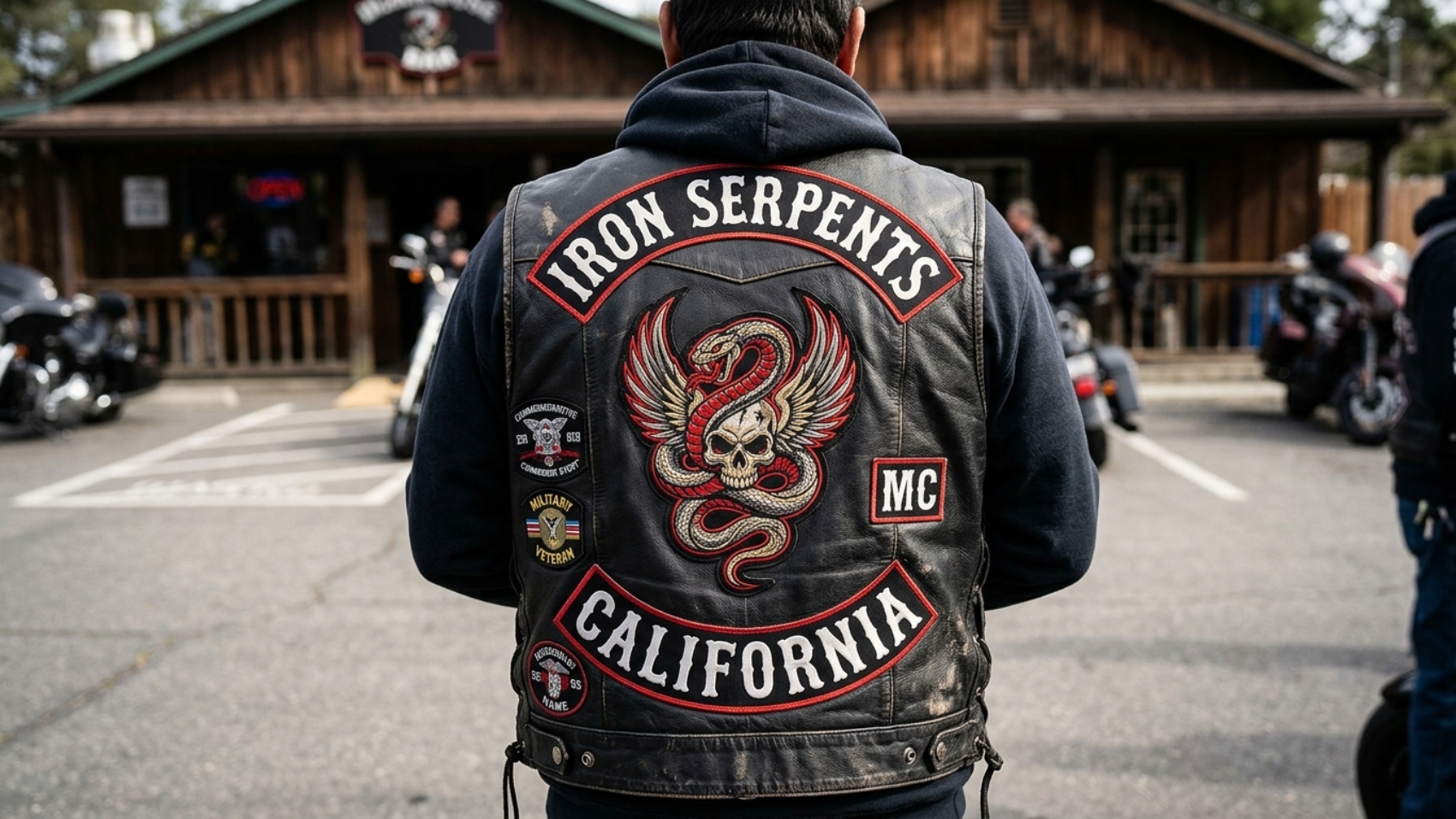
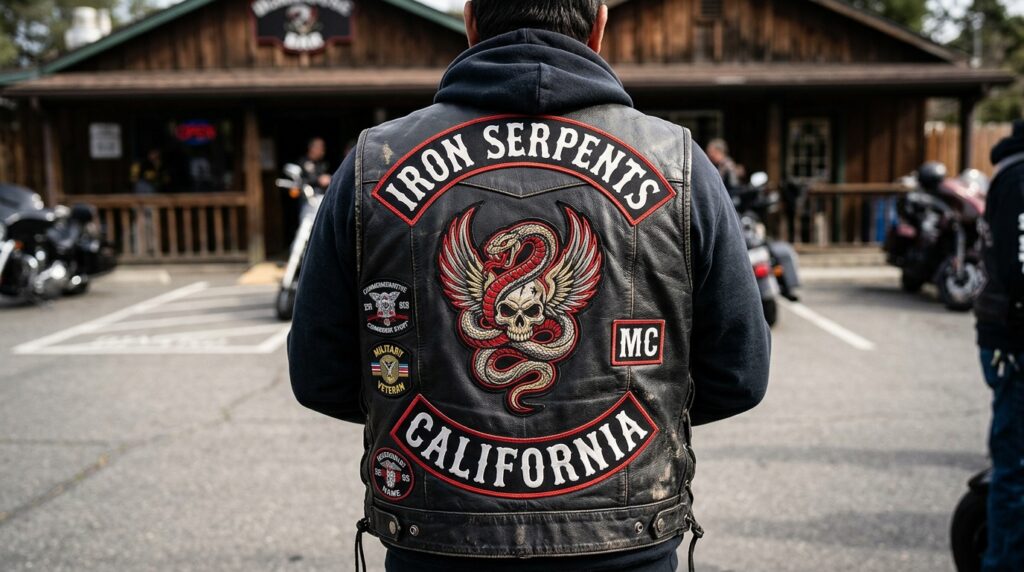
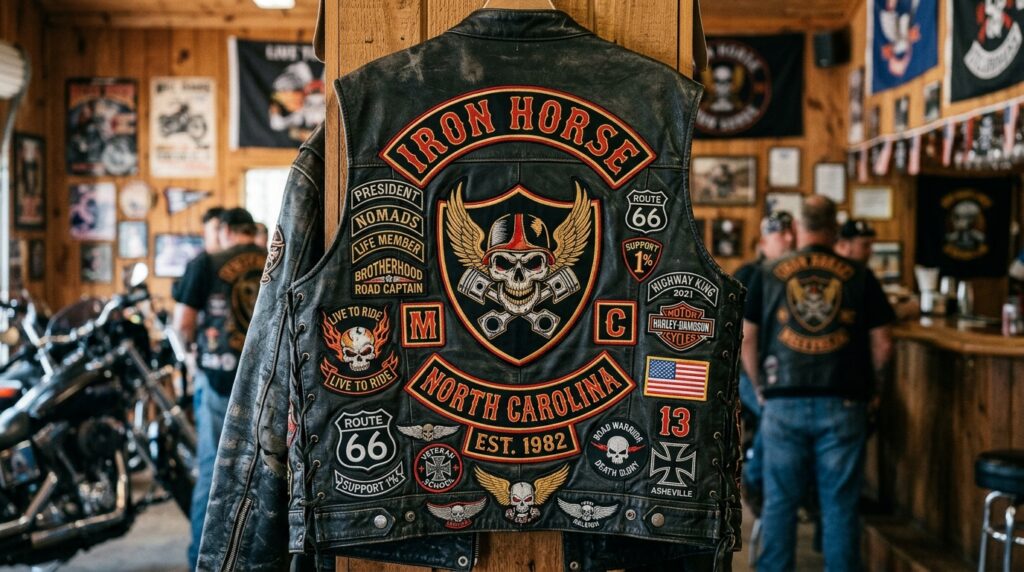
The image is instantly recognizable: a rider in a leather vest covered in patches, each one telling a story. A large center patch on the back. Curved rocker patches above and below. Smaller patches scattered across the vest. Each patch means something. Each one was earned.
Motorcycle club patches aren’t just decoration. They’re a complex, highly meaningful system with deep tradition, strict rules, and serious consequences for violations.
If you’re in a motorcycle club, thinking about starting one, or designing patches for a club, you need to understand the rules—and respect them.
This comprehensive guide reveals the complete MC patch system: what makes an authentic motorcycle club patch, the meaning behind the structure, the unwritten rules about placement and display, how to design MC patches correctly, and why respecting patch tradition matters more than you might think.
Whether you’re an officer looking to order new patches, a designer creating MC artwork, or someone curious about motorcycle club culture, this guide covers everything you need to know about the patches that represent MC life.
Understanding Motorcycle Club Patch Culture: Why It Matters
The Significance of Motorcycle Club Patches
In motorcycle club culture, patches represent far more than decoration or branding. They represent:
Identity — Your club, your chapter, your rank Achievement — Earned through time, commitment, and often specific deeds Brotherhood — Connection to club members and the broader MC community Reputation — How you’re known and respected in the motorcycle world Status — Your position within the club hierarchy
A member’s patch collection tells their history. How long they’ve been in the club. What chapters they’ve belonged to. What positions they’ve held. What battles they’ve fought (metaphorical and otherwise).
Patches are taken so seriously that:
- Wearing another club’s patches without membership is considered extremely disrespectful
- Stealing patches is virtually guaranteed to result in serious consequences
- Losing a patch vest can be as significant as losing a personal identification document
- Patches are sometimes buried with deceased members
This is the culture you’re entering when you work with motorcycle club patches.
The 1% Club Patch: Explained
What Does “1%” Mean?
The “1%” designation originated from the American Motorcycle Association’s (AMA) claim that 99% of motorcyclists are law-abiding citizens, and 1% are not.
Motorcycle clubs embraced this designation. Being a “1% club” means:
Definition: A club that doesn’t follow mainstream society rules. The club operates by its own code.
Not literally: It doesn’t mean the club is automatically illegal (though some are). It means the club operates independently, outside mainstream expectations.
The patch: The “1%” diamond patch, typically worn on the vest front, officially designates a club as a 1% motorcycle club.
1% Patch Appearance
Size: Typically 2-3 inches, diamond-shaped Design: “1%” inside a diamond shape Placement: Front of vest, left side (or right, depending on club preference) Material: Embroidered, woven, or PVC (professional clubs often use woven) Color: Usually red/white or black/white (varies by club)
Clubs That Wear the 1% Patch
The “Big Four” (dominant 1% clubs in the US):
- Hells Angels
- Outlaws
- Bandidos
- Mongols
But hundreds of other 1% clubs exist across the world, each with their own patches and traditions.
The Anatomy of a Motorcycle Club Patch: Understanding the Structure
Authentic motorcycle club patch design follows a very specific structure. Understanding this structure is critical if you’re designing patches for a club.
THE THREE MAIN COMPONENTS
Most MC patches consist of three distinct pieces:
1. TOP ROCKER (Curved patch above main design)
- Contains the state name or chapter name
- Curved to fit over rider’s back/shoulder
- Typically 3-5 inches wide
- Text in bold, easily readable font
2. CENTER PATCH (Main design)
- Club name/logo
- Club symbol or emblem
- Typically 4-6 inches tall
- Most distinctive piece
- Requires custom digitizing
3. BOTTOM ROCKER (Curved patch below main design)
- Typically contains “MC” (Motorcycle Club)
- Some clubs use year founded or chapter number
- Curved to match top rocker
- Same width as top rocker
Why Three Pieces?
The three-piece design serves practical and cultural purposes:
Practical: Each piece can be produced separately, making replacement easier if damaged Cultural: The structure is traditional and expected in MC culture Visual: The arrangement creates a professional, recognized appearance Versatility: Different chapters can use same center patch with different rockers
Example: Hells Angels Patch Structure
- Top rocker: State name (“CALIFORNIA,” “TEXAS,” etc.)
- Center patch: Death’s head (Hells Angels logo)
- Bottom rocker: “HELLS ANGELS” + “M.C.”
- 1% patch: Worn separately on front left
This three-piece structure is instantly recognizable and has remained consistent for decades.
Motorcycle Club Patch Components: Detailed Breakdown
TOP ROCKER PATCHES
Purpose: Identify chapter location or affiliation
Typical content:
- State name (most common)
- City name (smaller clubs)
- Chapter name or number
- Region designation
Design considerations:
- Text must be large and readable (1/2″ minimum height)
- Curved shape to fit over shoulders
- White/light text on dark background (or vice versa)
- Bold sans-serif font for clarity
- Usually 3-5 inches wide
Common mistake: Text too small or hard to read Correct approach: Prioritize readability above all
CENTER PATCHES (Main Design)
Purpose: Club identity, logo, symbol
Critical considerations:
Design complexity:
- Can range from simple to highly detailed
- Most clubs use recognizable symbol or emblem
- Should be distinctive and memorable
- Must work at various sizes (t-shirts, patches, etc.)
Common MC center patch themes:
- Animal (eagle, skull, ram, etc.)
- Mythical figure (demon, angel, etc.)
- Symbol (skull and bones, shield, etc.)
- Custom design specific to club
Size: Typically 4-6 inches tall (patches), can be smaller on t-shirts
Color palette:
- 2-5 colors is typical
- More colors = higher cost but more detail
- Color choice can have cultural meaning
- Most common: red, black, white, gold
BOTTOM ROCKER PATCHES
Purpose: Formally identify as motorcycle club
Typical content:
- “M.C.” (Motorcycle Club) – universal designation
- Club name (sometimes)
- Year founded (sometimes)
- Chapter number (sometimes)
Design considerations:
- Usually matches top rocker in size and style
- Text clarity is critical
- Curved to match top rocker shape
- Creates balanced visual with top rocker
1% DIAMOND PATCH
Purpose: Officially designate as 1% club
Design:
- Diamond shape (roughly 2-3 inches)
- “1%” inside diamond
- Bold, clear lettering
- High contrast (dark background, light text or vice versa)
Placement: Usually front left of vest
Significance: Only worn by clubs that officially claim 1% status
MC Patch Placement: Rules & Traditions
Motorcycle club patch placement follows strict, unwritten rules. Violating these rules is considered extremely disrespectful.
VEST/JACKET PLACEMENT GUIDE
Back of Vest:
- Center position: Center patch (largest, most prominent)
- Top: Top rocker patch
- Bottom: Bottom rocker patch
- Arrangement: Top rocker > center patch > bottom rocker
Front Left Side:
- 1% diamond: If applicable
- Other significant patches: Club officer designation, MC-wide patches
Front Right Side:
- Secondary patches: Support patches, affiliations
- Smaller designs: Event patches
Sleeves:
- Arm patches: Chapter designation, achievement patches
- Limited placement: Not overcrowded
Rules:
- Center patch placement is sacred (never moved)
- All three main patches must be worn together
- No gaps between rocker patches and center patch
- Proper spacing between all elements
- Patches must be straight and aligned
The Vest as Identity
Think of a motorcycle club vest as a resume of the wearer:
- Center patch = Club membership
- Top rocker = Chapter/location
- Bottom rocker = MC status
- 1% patch = Club classification
- Additional patches = Officer rank, achievements, affiliations
- Worn-out/faded patches = Proof of time in club
A club member might have the same vest for 10-20+ years, with the same patches. The patches wear with the vest, becoming part of the member’s identity.
MC Patch Colors: Meaning & Significance
Color choices in MC patches aren’t random. Colors often have cultural meanings and associations.
Common MC Patch Colors & Meanings
Red:
- Hells Angels signature color
- Represents aggression, dominance, fire
- Strong association with old-school clubs
- Commands respect
Black:
- Universal MC color
- Represents strength, power, seriousness
- Used by clubs worldwide
- Can be combined with any other color
White:
- Contrast color
- Used for text/detail visibility
- Represents purity (rare in MC culture—usually combined with other colors)
- Creates clean, professional appearance
Gold:
- Luxury, prestige
- Often used for club names or details
- Creates premium appearance
Blue:
- Less common in 1% culture
- Some regional clubs use blue
- Can represent loyalty, calm
- Sometimes associated with smaller/newer clubs
Green/Purple:
- Rare in traditional 1% culture
- Sometimes used by younger clubs or outlaw regions
- Less traditional appearance
Color Combinations
Red + Black + White:
- Classic, aggressive, traditional
- High contrast, professional appearance
- Hells Angels-influenced aesthetic
Black + Gold:
- Professional, prestigious
- Less aggressive than red/black
- Growing in newer clubs
Black + White:
- Clean, stark, powerful
- Maximum contrast
- High readability
Critical Rule:
Never wear another club’s signature colors without permission. Color combinations are claimed by established clubs. Using their colors can be interpreted as trying to claim their identity.
Example: Wearing red and white (Hells Angels colors) without being a member is extremely disrespectful and can result in serious consequences.
Designing Motorcycle Club Patches: Best Practices
If you’re designing patches for your motorcycle club, understand these critical design principles.
DESIGN PRINCIPLES FOR AUTHENTIC MC PATCHES
1. Simplicity with Impact
The best MC patches are simple enough to recognize instantly, but distinctive enough to stand out.
- 3-5 elements maximum in center patch
- Bold shapes, clear lines
- Avoid overly complicated details
- Logo should work at both large (jacket) and small (cap) sizes
2. Embroidery Readability
Remember: Your design will be embroidered, not printed. This changes what’s possible.
- Text needs minimum 1/4″ (6mm) height
- Fine details disappear (avoid thin lines)
- Solid shapes work better than gradients
- Bold outlines are critical
3. Timelessness
MC patches should look good for 10+ years, not just this season.
- Avoid trendy design elements
- Classic style ages better than modern style
- Proven design themes (skulls, animals, shields) work well
- Original artwork beats following current trends
4. Recognition & Pride
The patch should make members proud to wear it.
- Distinctive enough to be remembered
- Professional appearance (no amateur look)
- Represents club values and identity
- Looks good on vest and other merchandise
5. Scalability
Design must work at multiple sizes.
- Looks good at 2″ (hat patches)
- Looks good at 5-6″ (back patches)
- Readable at all sizes
- Details don’t disappear when scaled down
COMMON MC DESIGN MISTAKES
Mistake #1: Too Many Colors
More colors = higher cost + more complexity + longer production time
Better: 3-4 colors maximum for center patch
- Uses bold color contrast
- Costs less than 6+ colors
- Embroidery quality remains high
Mistake #2: Text Too Small
Small text becomes illegible when embroidered
Better: Text minimum 1/4″ (6mm) height
- Easily readable from arm’s length
- Professional appearance
- No customer complaints about legibility
Mistake #3: Overly Complex Design
Tiny details that disappear when stitched
Better: Simplified shapes and bold outlines
- All details remain visible
- Professional, clean appearance
- Works at all sizes
Mistake #4: Poor Font Choice
Thin, decorative fonts don’t work in embroidery
Better: Bold sans-serif fonts
- Maximum readability
- Professional appearance
- Works at all sizes
Mistake #5: Ignoring Embroidery Constraints
Designing as if it will be printed, not embroidered
Better: Understand embroidery limitations
- Work with experienced digitizer
- Test samples before full production
- Adjust design for embroidery reality
MC Patch Materials: Embroidered vs. PVC vs. Woven
Different patch materials communicate different things about your club.
EMBROIDERED PATCHES (Traditional)
Appearance: Thread stitched on fabric Cost: $$ (most affordable) Durability: 5-10 years typical Feel: Soft, flexible, traditional
Best for:
- Clubs on budget
- Traditional aesthetic
- Working clubs (more comfort)
Disadvantages:
- Less detailed than woven
- May fray at edges
- Requires backing
WOVEN PATCHES (Premium Professional)
Appearance: Interlaced thread creating flat, detailed surface Cost: $$$ (most expensive) Durability: 10+ years Feel: Smooth, flat, professional
Best for:
- Clubs wanting premium appearance
- High-visibility clubs
- Clubs with detailed designs
- Maximum detail and sharpness
Advantages:
- Captures finest detail
- Extremely professional appearance
- Excellent durability
- Looks sharp for years
Why many established clubs use woven: Represents longevity and quality
PVC PATCHES (Modern Alternative)
Appearance: Molded rubber with embossed or 2D design Cost: $$ – $$$ Durability: 10+ years (excellent) Feel: Hard/semi-rigid, modern
Best for:
- Clubs wanting modern appearance
- 3D/embossed effects
- Extreme durability needs
- Weather-resistant requirement
Advantages:
- Extremely durable
- Waterproof
- Modern appearance
- Can create 3D effects
Disadvantages:
- Doesn’t look traditional
- More expensive than embroidered
- Feels different than fabric patches
The MC Patch Order: What You Need to Know
TYPICAL MC PATCH ORDER BREAKDOWN
When a motorcycle club orders patches, they typically order:
For center patch:
- 50-500 pieces (depends on chapter size and distribution)
- Cost: $2-3 per piece (embroidered) to $5-7 per piece (woven)
- Timeline: 5-7 days standard, 2-3 days rush
For top rocker:
- Same quantity as center patch
- Cost: $1.50-2.50 per piece (embroidered)
- Timeline: Same as center patch
For bottom rocker:
- Same quantity as center patch
- Cost: $1.50-2.50 per piece (embroidered)
- Timeline: Same as center patch
For 1% diamond patch:
- Smaller quantity (might be worn by fewer members)
- Cost: $0.75-1.50 per piece (embroidered)
- Timeline: Same as other patches
Total order example: 100 members, full patch set
- 100 center patches: $200-300
- 100 top rockers: $150-250
- 100 bottom rockers: $150-250
- 100 1% diamonds: $75-150
- Total: $575-950
- Per member: $5.75-9.50 complete set
REORDER CYCLES
Most motorcycle clubs reorder patches on these cycles:
New chapter: Initial full order of all four patch types Annual refresh: Top rocker (location) and center patch refresh Member additions: New members get full patch set Special events: Special event patches (anniversary, rally, etc.)
Real Examples: Iconic MC Patch Designs
HELLS ANGELS
Center patch: Death’s head (skull with wings) Colors: Red, white, black Top rocker: State name Bottom rocker: HELLS ANGELS / M.C. 1% patch: Yes (diamond with “1%”)
Why it works:
- Instantly recognizable worldwide
- Simple but powerful (skull with wings)
- Bold colors command respect
- Consistent across decades
OUTLAWS MC
Center patch: Skull with crossed pistons Colors: Black and white (primarily) Top rocker: State name Bottom rocker: OUTLAWS / M.C. 1% patch: Yes
Why it works:
- Motorcycle-specific symbol (pistons)
- High contrast black and white
- Clear, powerful imagery
- Strong brand recognition
BANDIDOS
Center patch: Red and gold Mexican bandit face Colors: Red, gold, black Top rocker: State/country name Bottom rocker: BANDIDOS / M.C. 1% patch: Yes
Why it works:
- Cultural symbol (bandit)
- Distinctive color palette
- Recognizable even at distance
- Proud heritage representation
MONGOLS
Center patch: Mongolian warrior face Colors: Black and white primarily Top rocker: State name Bottom rocker: MONGOLS / M.C. 1% patch: Yes
Why it works:
- Strong warrior imagery
- Bold, simple face design
- Easy to embroider and recognize
- Cultural heritage
MC Patch Digitizing: What You Need to Know
Professional digitizing is essential for quality MC patches. This isn’t an area for amateur work.
WHY PROFESSIONAL DIGITIZING MATTERS
MC patches are highly visible, often worn for decades, and represent club identity. Poor digitizing results in:
- Text that’s hard to read
- Details that disappear
- Design that looks cheap
- Finished patches that look unprofessional
- Member dissatisfaction
DIGITIZING REQUIREMENTS FOR MC PATCHES
Text precision:
- Text must be perfectly readable
- Proper stitch direction for each letter
- Minimum 1/4″ height for all text
- Clean, professional letterforms
Complex imagery:
- Skulls, animals, faces need expertise
- Shading and dimension require skill
- Fine details must be simplified for embroidery
- Professional results, not amateur work
Color accuracy:
- Each color change must be planned
- Proper color sequencing for efficiency
- Stitch density calibrated for each color
- No color bleeding or overlap issues
Rocker curve:
- Top and bottom rockers have curved text
- Text must follow curve properly
- Curve radius must be correct for garment fit
- Professional digitizing is essential
FINDING A PROFESSIONAL DIGITIZER
Work with a digitizer who:
- ✓ Has experience with MC patches
- ✓ Understands embroidery machines
- ✓ Can handle complex imagery (skulls, faces, etc.)
- ✓ Provides test stitch-outs before production
- ✓ Communicates clearly about limitations
- ✓ Has portfolio of professional work
Red flags:
- ✗ Won’t provide test stitch-outs
- ✗ Promises results that aren’t embroidery-realistic
- ✗ No portfolio or examples
- ✗ Can’t explain digitizing constraints
- ✗ Rush work without testing
FAQ: Motorcycle Club Patches
Can I wear another club’s patch if I respect them?
No. This is one of the most serious violations in MC culture. Wearing another club’s patches without membership can result in severe consequences, including violence.
Exception: Some clubs offer “support” patches that allies can wear. This is explicit permission only.
What does it mean if someone’s patches are worn/faded?
Respect. It means they’ve been wearing those patches for years, literally wearing them in through hard riding and hard living. The more worn, the more “street credible” in some circles.
Some members deliberately wear their vests to give them that broken-in look.
Why is losing a patch vest so serious?
Because the vest is the physical embodiment of club membership. The patches represent earned status, chapter affiliation, and personal history. Losing them is like losing your membership card, your history, and your identity in the club all at once.
Some clubs will require you to earn your membership status all over again if you lose your vest.
Can I design an MC patch if I’m not in a club?
Yes, but understand that the design has cultural weight. Design respectfully. Understand the culture. Don’t trivialize the tradition.
If you’re designing for a club, work closely with club leadership to ensure the design aligns with their vision and values.
What’s the difference between a 1% club and a regular motorcycle club?
Regular motorcycle clubs: Follow laws, exist more for camaraderie 1% clubs: Operate by their own rules/code, don’t necessarily follow mainstream law
The 1% patch officially designates this distinction.
How much does an MC patch order cost?
Typical breakdown (embroidered):
- Center patch: $2-4/piece
- Top rocker: $1.50-2.50/piece
- Bottom rocker: $1.50-2.50/piece
- 1% diamond: $0.75-1.50/piece
For 100 members: $575-950 total ($5.75-9.50/member for full set)
Woven patches cost 25-50% more. PVC patches vary widely.
How long do MC patches last?
Embroidered: 5-10 years typical (worn out like the vest) Woven: 10-15 years (more durable) PVC: 10+ years (extremely durable)
Most members replace patches when replacing their vest or as needed for wear/damage.
Can patches be customized for specific chapters?
Absolutely. This is standard:
- Top rocker: Customized for chapter location
- Center patch: Usually club-wide standard
- Bottom rocker: Customized for chapter or MC designation
- Additional patches: Chapter-specific patches very common
Should we get embroidered or woven patches?
Embroidered:
- Most affordable
- Traditional look
- Good quality
- Best for smaller budgets
Woven:
- Premium appearance
- More durable
- Captures detail better
- Best for clubs wanting top quality
Recommendation: If you’re established and want to look professional, woven is worth the investment.
Professional MC Patch Design & Production
At Gem Punch, we understand motorcycle club patch culture and the importance of getting it right.
We specialize in:
- ✓ Authentic MC patch design
- ✓ Professional digitizing for complex imagery
- ✓ Rocker patch expertise (curved text, proper sizing)
- ✓ Quality embroidered and woven patches
- ✓ Test stitch-outs before production
- ✓ Understanding MC patch culture and traditions
- ✓ Fast turnaround (5-7 days standard, 2-3 days rush)
- ✓ Experienced with 1% clubs and traditional designs
Related Resources: Custom Patches & Motorcycle Culture
- Complete Guide to Custom Patches — All patch types and applications
- Professional Embroidery Digitizing — Expert digitizing for complex designs
- Patch Sizing Guide — Getting MC patches the right size
- Custom Patches Service — Order your MC patches with confidence